

The Daily Word
Hear the Daily Word on

Get the Daily Word in Your Inbox!
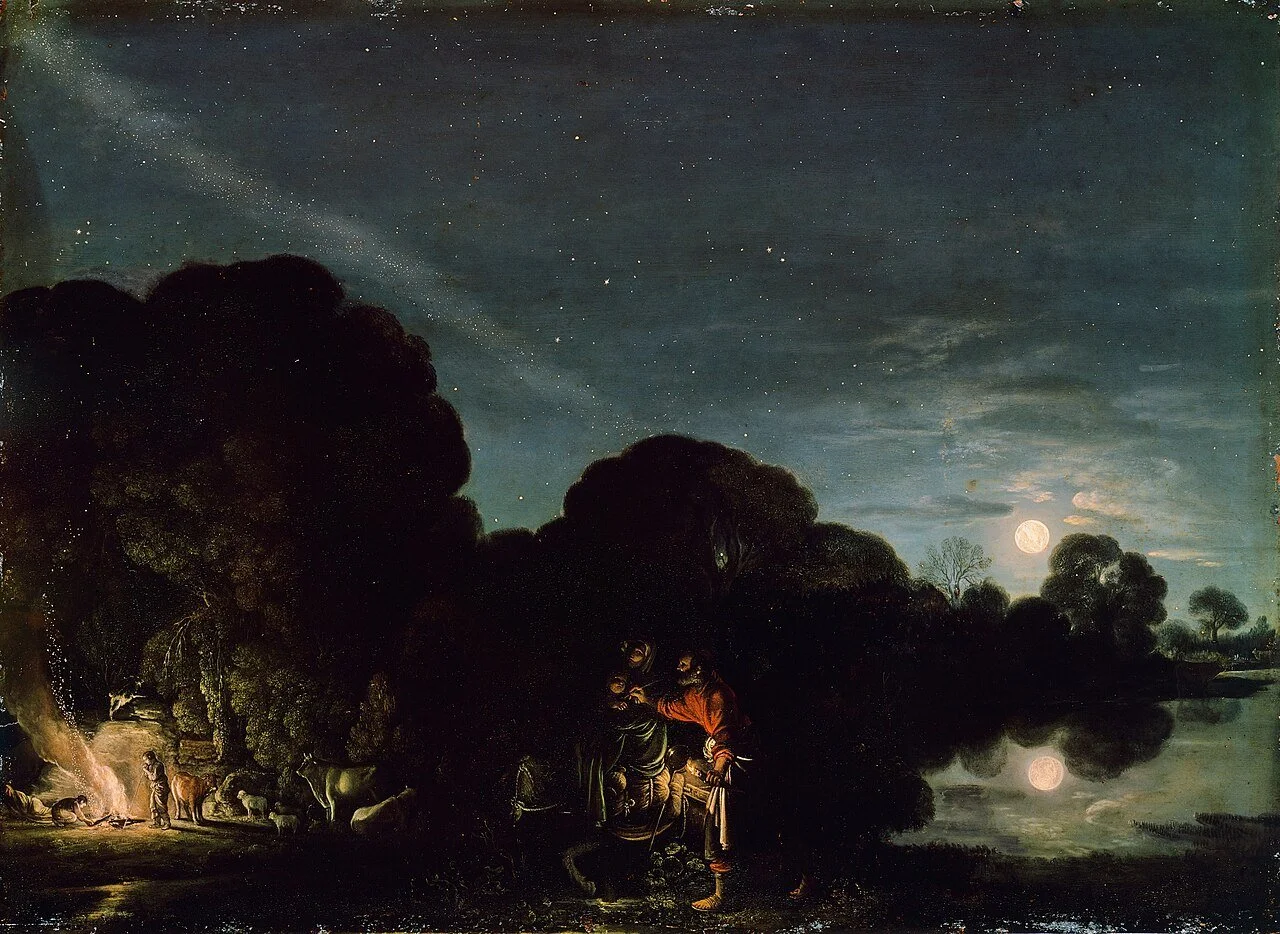
Alone in Egypt
Christmas is not simply a day but rather a season. The Christmas season runs until the Feast of the Baptism of the Lord, usually occurring during the second week of January. During the first eight days of Christmas, we call it the Octave of Christmas, every day for eight days is Christmas Day! So, Merry Christmas to you! Today, the Sunday following Christmas we celebrate the Feast of the Holy Family of Jesus, Mary, and Joseph. Yes, they are called the Holy Family, but it does not imply that their life was easy. Not long after Jesus was born, the Holy Family needed to flee Bethlehem for Egypt.
“When he prays, he is heard;
he stores up riches who reveres his mother.”cf. Sirach 3:2-6
Christmas is not simply a day but rather a season. The Christmas season runs until the Feast of the Baptism of the Lord, usually occurring during the second week of January. During the first eight days of Christmas, we call it the Octave of Christmas, every day for eight days is Christmas Day! So, Merry Christmas to you! Today, the Sunday following Christmas we celebrate the Feast of the Holy Family of Jesus, Mary, and Joseph. Yes, they are called the Holy Family, but it does not imply that their life was easy. Not long after Jesus was born, the Holy Family needed to flee Bethlehem for Egypt.
When we hear of Joseph bringing Mary and Jesus to Egypt, we also remember another Joseph who also made a trip to Egypt — well, not so much a trip, but was rather sold into slavery in Egypt. The Joseph we hear of in Genesis was pushed to Egypt because of the jealousy of his brothers. In fact, they thought Joseph was dead. Yet, God had a plan, and Joseph through his suffering and faithfulness to God found favor with the Pharaoh and later became second in command in Egypt. When a famine struck, Joseph’s brothers needed to go to Egypt to get food and supplies. They would never have imagined that the man they are going to ask for help would be the brother they had discarded. When Joseph reunited with his brothers, he forgave them and he said something that showed his love and his mercy, and also his faith, explaining that God had sent him ahead of them to save their lives during the famine. Joseph’s faith in God and His Providence can be summed up in what he says later to his brothers, “What you meant for evil, God meant for good” (Gen. 50:20). What we may intend, in our selfishness and pride, for the ill of others, God will use it for good. Fast forwarding to the Holy Family, what Herod meant for evil (the slaughter of the Holy Innocents), God brought good — preserving the life of Jesus so that He might later lay it down for our sake and our salvation. Both Joseph’s exemplified what it means to be obedient to God and to trust in His Providence. They may not know exactly what God is doing, but they do know and believe that God will bring good, and so they said yes, endured their share of suffering, and kept the faith.
I chose to entitle this reflection “Alone in Egypt” not because I believe that Joseph was abandoned in Egypt, but rather to highlight the importance of “aloneness” or solitude in our lives. Without aloneness with God, Joseph would not be able to have heard the Voice of God and His promptings. It is because Joseph was truly a righteous man, that is being in the right relationship with God, that he was obedient, and the fruit of his obedience was the eventual salvation of souls by the redeeming act of the Cross. There is also another reason why I chose the title for this article. I had recently read something about how the movie Home Alone is really a Christian movie, and watched it through a Christian lens this week. But, I will expand on this on a reflection I will publish tomorrow. So stay tuned for that. Now, back to the Holy Family.
The Holy Family of Jesus, Mary, and Joseph shows us how a family ought to live. Jesus was obedient to His parents, Mary loved her Son, nursed Him, and supported Him, and Joseph provided for Jesus and taught Him what it meant to be a Son and a man. How well do we live out our roles in the life of our families? As children, are we obedient to our parents? As parents, do we love our children in both word and action, showing them the love of God and teaching them the importance of one’s relationship with Him? The Holy Family had burdens and troubles as any family did, and so they know what we experience. Our Lord came from a family just like ours, and so He can truly empathize with us, for He truly was like us in all things but sin.
The Holy Family shows us what is most important in life: relationship with God and love of God and neighbor, and all this starts by being alone with God, to allow Him to speak to us and to listen with an open heart. When we learn to do this, we will know even when we are going through the Egypts of our lives, that God is with us, that He will provide for us, and that He will bring good out of every situation.
So, brothers and sisters, let us look to the Holy Family as our primary example of how to live our lives as individuals and as a family and let us not be afraid to be alone with God and to trust in His Providence even as we flee to Egypt.
Came for You
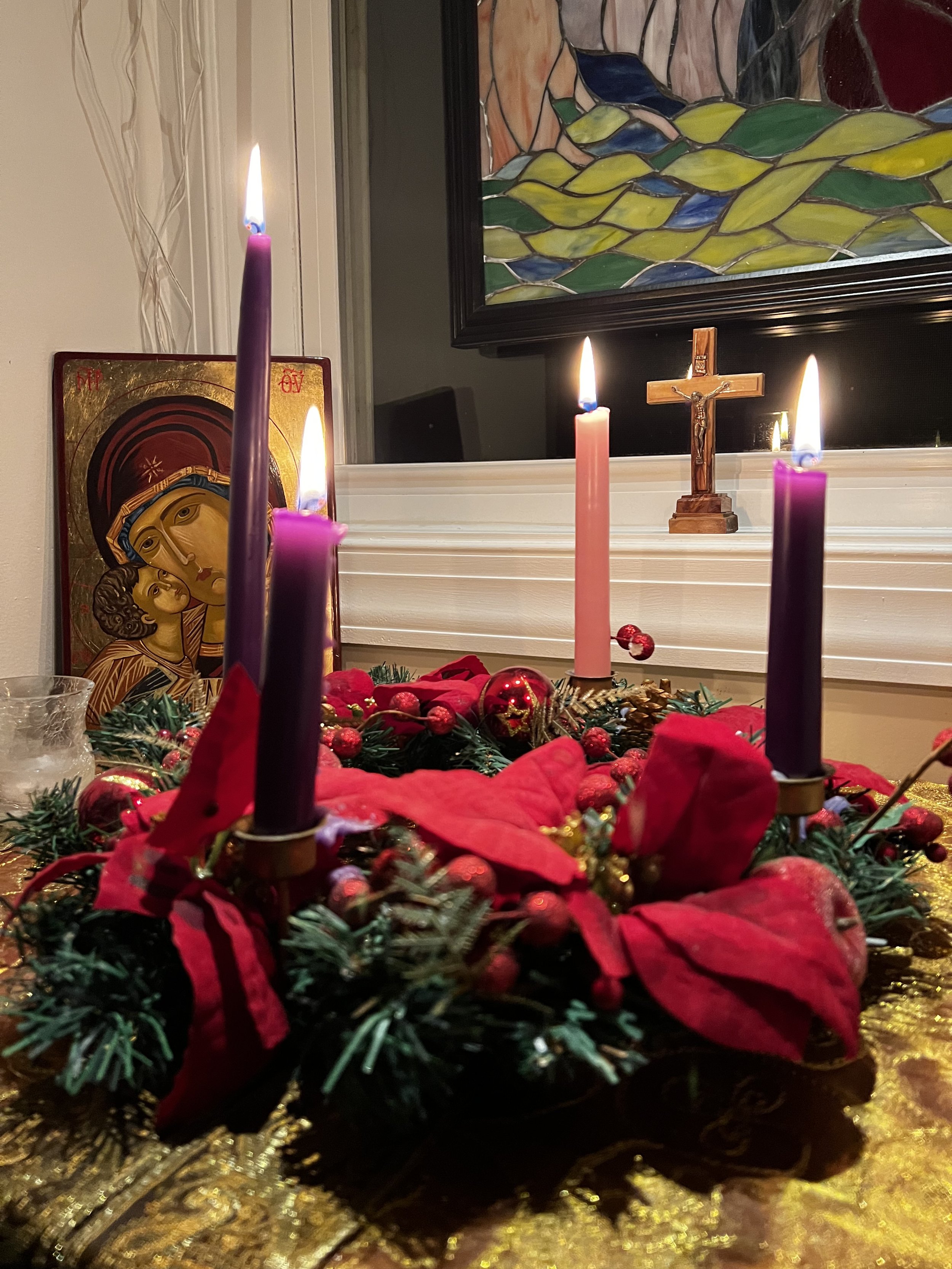
As we enter into the fourth week of Advent, we inch closer and closer to Christmas Day, the day of our long-awaited expectation. But, what exactly is the object of this anticipation? For whom or what have we been preparing our hearts these past three weeks? During the first week of Advent, we focused on the hope that comes from Christ. The second week of Advent we sought the peace that only Christ can bring. Last week we allowed our hearts to be filled with joy. Today and this final week of Advent, we come to encounter Love itself — Jesus, who is Emmanuel, “God with us.”
“All this took place to fulfill what the Lord had said through the prophet:
Behold, the virgin shall conceive and bear a son,
and they shall name him Emmanuel,
which means “God is with us.’”Matthew 1:22-23
As we enter into the fourth week of Advent, we inch closer and closer to Christmas Day, the day of our long-awaited expectation. But, what exactly is the object of this anticipation? For whom or what have we been preparing our hearts these past three weeks? During the first week of Advent, we focused on the hope that comes from Christ. The second week of Advent we sought the peace that only Christ can bring. Last week we allowed our hearts to be filled with joy. Today and this final week of Advent, we come to encounter Love itself — Jesus, who is Emmanuel, “God with us.”
The fruit of Advent is Jesus. Jesus is the reason for our anticipation and waiting. We have been using these past couple of weeks to tidy up our inner homes so that we can welcome Jesus into our hearts on Christmas Day. In the fullness of time, God sent His only begotten Son into this world so that all might be saved. Jesus came to this earth for you and for me and for all, extending to us an invitation to eternal life. This Christmas, Jesus, of course, will not be born again in Bethlehem, but will we allow Jesus and His love to be born in our hearts?
Jesus came into this world to remind us of the reality of His name, that God is with us, not just in a heartwarming, sentimental way, but in a real and tangible way. That God lives in us. We who are baptized are baptized in Christ, we have received the gift of sanctifying grace, a share in the life of God. So, God is not just with us in a psychological sense that “we are not alone,” but God is truly with us — in all aspects of our lives, in our joys, our sorrows, and in the daily moments of our lives. Jesus comes to us this Christmas, will we allow Him into our hearts and allow His love to take root in our lives?
Let us remember that God is indeed always with us, the God who is our hope, our peace, and our joy, the God who humbles Himself and comes to us, we who by His everlasting love, have been made His very own sons and daughters. Our God is a God who comes to save us and to love us. This Christmas, may we find the courage to welcome Him, receive His love, and in turn share this love with others.
Patiently Rejoicing
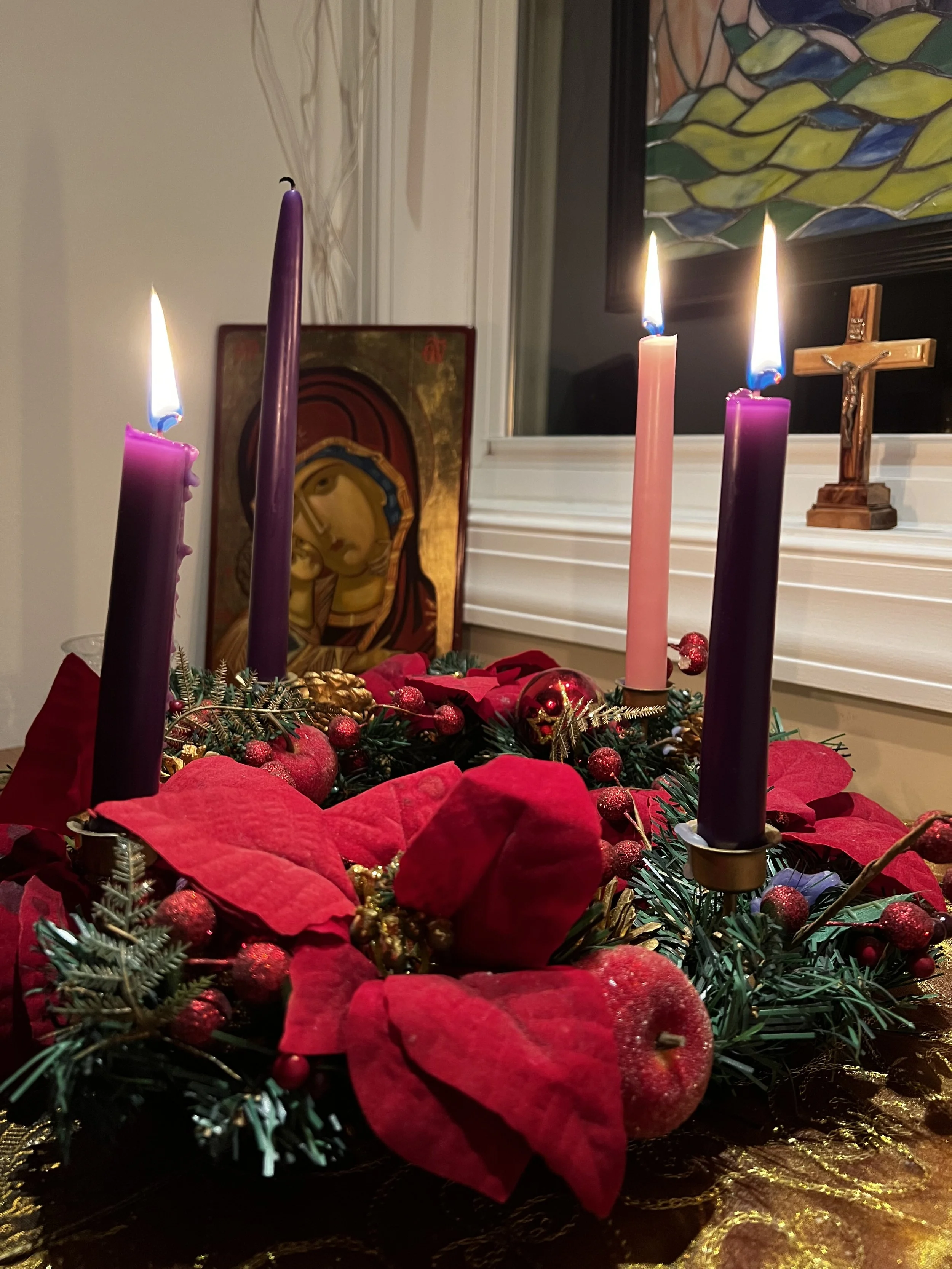
“Patience is a virtue” is something I’ve heard throughout my childhood and adolescence, and now it has become one of my own sayings! On the third Sunday of Advent, the Church reminds us to rejoice as we hear in the entrance antiphon and the first reading from Isaiah. We call the third Sunday of Advent Gaudete Sunday, from the Latin word meaning “rejoice.” Why do we rejoice? The Lord is coming! God comes to meet us, and for that we rejoice. In theology we often speak of the coming of God’s Kingdom as “already, not yet,” because yes the Kingdom, who is Jesus Himself has come to earth and has conquered sin and death, but that fullness in space and time will not be realized until He comes again. Yes, the battle has been won, but we here on earth must still keep fighting and turning back to God. So, we rejoice indeed, and we must do so patiently.
“You too must be patient.
Make your hearts firm,
because the coming of the Lord is at hand.”James 5:8
“Patience is a virtue” is something I’ve heard throughout my childhood and adolescence, and now it has become one of my own sayings! On the third Sunday of Advent, the Church reminds us to rejoice as we hear in the entrance antiphon and the first reading from Isaiah. We call the third Sunday of Advent Gaudete Sunday, from the Latin word meaning “rejoice.” Why do we rejoice? The Lord is coming! God comes to meet us, and for that we rejoice. In theology we often speak of the coming of God’s Kingdom as “already, not yet,” because yes the Kingdom, who is Jesus Himself has come to earth and has conquered sin and death, but that fullness in space and time will not be realized until He comes again. Yes, the battle has been won, but we here on earth must still keep fighting and turning back to God. So, we rejoice indeed, and we must do so patiently.
When John the Baptist was imprisoned, he sent his disciples to ask Jesus if He indeed was the One they’ve been waiting for or should they keep looking. Jesus told them to tell John all that they’ve been witnessing — the blind seeing, the deaf hearing, the lame walking, and the poor hearing the Good News. In other words, look at the signs of the times. Look around you and see and believe. Later, Jesus clarified John’s identity and his role in salvation history — he is the messenger who has been sent to prepare the way for the Messiah. So, brothers and sisters, what are the signs of our times? What do we see? Do we see Christ in the midst of those signs? It might be difficult at first. The violence. Wars. Injustice. Poverty. Sickness. Death. But our faith tells us that God is in all of it. God’s Providence is there. Can we see it with the eyes of faith? We must learn to truly see and hear as Christ has taught us to, with His eyes and ears. It cannot be rushed for we must do so patiently.
So when the Sisters and my teachers used to remind me daily, “patience is a virtue,” what they were trying to tell me was not simply to stop rushing and take my time but to see things as God sees them, to know and trust that God is in control and I need only cooperate with His grace, and His will indeed will be done. We must be patient in building up the Kingdom by doing our part, living out the call to which God has called us, and to do so with joy and patience, joy because God is with us and patience because He will make all things new and bring good out of all situations.
Therefore, brothers and sisters, as we continue with our Advent journey and move closer to Christmas may we rejoice because God has so loved us and may we be patient because He has so much in store for us!